Wildlife of
Singapore
Understanding the animals we share our island with is the first step toward a peaceful home. From the melodies in our trees to the playful families in our waterways, local wildlife is an integral part of life in Singapore. Discover fun facts and learn how we can all coexist harmoniously in our garden city.

Birds in Singapore

Collared Kingfisher
One of eight types of kingfishers in Singapore, the Collared Kingfisher is the most common and widespread kingfisher in Singapore. These birds can dive into water at speeds of up to 40km/h to catch fish and crustaceans. They thrive in habitats including waterbodies near forest edges, parks and gardens. Fun facts: This bird was once featured on our ten-dollar bill circulated in the 1970's and 1980's.


Oriental Pied Hornbill
The Oriental Pied Hornbill is a major conservation success story in Singapore. Driven to local extinction in the 1800s, they were reintroduced and are now commonly spotted across the island. They are highly adaptable, making appearances in urban green spaces and housing estates. The casque: The block on their beak is hollow and acts as a resonating chamber to amplify their calls. Take note that although they look like the Toucan on your Fruit Loops box, they are actually unrelated species and are a good example of convergent evolution. Only the Hornbill has a casque. They feed on fruits, insects, small mammals and reptiles.
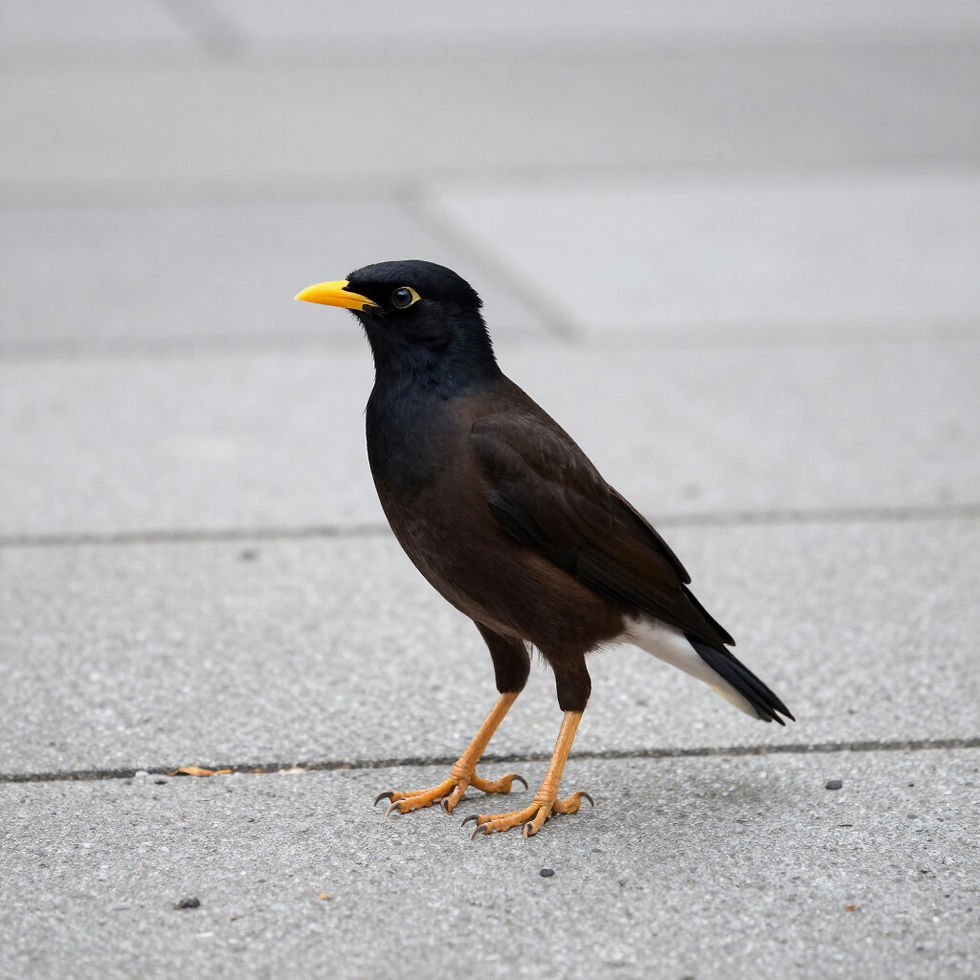
Javan Myna
Urban dwellers: Despite being ubiquitous today, they were actually introduced to Singapore in the 1920s through caged bird pet trade. The Javan Myna are extremely smart and adaptable because they can eat almost anything from scraps, insects and fruits to leftovers from hawker centres. They often gather in huge noisy flocks at sunset to communal roost in trees.
Myna bird "chattering" is highly deliberate, complex communication rather than random noise. They use a wide variety of sounds—like clicks, whistles, growls, and mimics—to survive, establish territory, and socialize

Asian Koel
The Asian Koel is a kind of cuckoo bird. In Singapore it is nicknamed the "uwu bird" due to their distinctive uwu uwu sound. Koels are shy birds and can usually be heard before they are seen. Their loud mating calls can start before sunrise and sometimes continue into the night.
Male koels are glossy black with bright red eyes while female koels are brown with white streaks and spots. Asian Koels are brood parasites meaning they lay their eggs in other bird's nest, manipulating other birds to raise their young. They may play a part in reducing crow breeding success in Singapore.

House Crow
House crow is considered one of the world's most intelligent birds. They can recognise faces, solve problems and remember locations where food can be found. Similar to Javan Mynas, they are extremely vocal birds with different calls for danger, food and territorial disputes. Crows are very protective of their young and may swoop at people who get too close to them. Their nests are made of random urban material like wires, plastic strips, cable ties and even coat hangers. Fun facts: House crow fledglings look remarkably similar to adults, as they leave the nest at nearly full adult size.


Wild Chickens
Singapore has several types of free-roaming "wild" or "semi-wild" chickens that people commonly see in parks or estates. Modern chickens descended from the true wild jungle chicken also known as the red jungle fowl seen in the picture. The males have beautiful red, orange, green, and gold feathers. They are naturally shy and usually stay near forest edges. How to tell the difference? The red jungle fowl sports a white lappet, a white patch at upper base of the tail, can fly, and has a slender and lean body shape.

Urban Otter Clans
- Singapore’s clean waterways are a big reason otters made such a strong comeback — they returned after decades of water pollution control improvements. Highly social creatures living in tight-knit family 'clans'.
- Expert fish hunters often found near canals and reservoirs.
- Playful yet territorial, protecting their local waterways.
- Vocal communicators using whistles and chirps to stay connected.
- They have webbed paws that are highly adapted for swimming and burrowing.


Asian Water Monitor
This is the big one you see at parks, canals, drains and reservoirs. They are scavengers eating frogs, fish, crabs and sometimes leftovers. They are surprisingly intelligent and can recognise regular feeding areas and remember human activity patterns. Despite their size, they are shy and excellent swimmers. They play a vital role in our ecosystem- keeping the environment clean by devouring up decaying biomass.

Bats
There are over 20 species of bats in Singapore. No, bats are not birds. They are in fact the only mammals capable of true sustained flight. Many local bats feed on insects like mosquitoes, moth or beetles and help as natural pest controllers. Some species like fruit bats also help with pollination and seed dispersal. Bats are mostly active at dusk and can sometimes roost in unexpected places. Fun fact: If you get bitten by a bat, a post-exposure treatment for rabies can cost upwards of $1,500 so always get a wildlife specialist for help to remove bats.
Fascinating Local Neighbors
Singapore is home to a surprising array of wildlife. Understanding these creatures helps us coexist peacefully in our garden city.

Eurasian Wild Boar
Native to Singapore, these intelligent omnivores are mostly active at dawn and dusk, searching for roots, earthworms, insects and fallen fruit. They are extremely adaptive forest edge creatures - meaning they thrive where the forest meets urban areas. They play an important part in the ecosystem by turning over soil which helps in nutrient cycling. Despite their reputation, they are not aggressive unless threatened. Always observe from a safe distance.
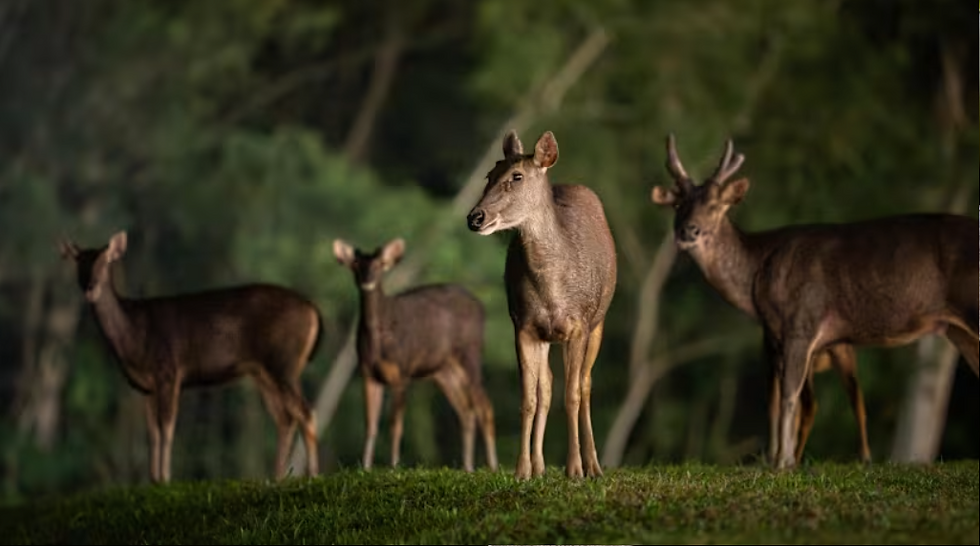
Sambar Deer
Sambar deer are surprisingly strong swimmers and often enter rivers or lakes to cool off and escape predators. In recent news, it was reported that the sambar deer population in Singapore had rebounded from 15 to 120 in 5 years. Sambar deer are mostly nocturnal creatures. Despite their large size, their dark brown coats help them blend into forests and dense vegetation. Adults males can grow up to 300kg. Sambar deers may wander near roads bordering forested areas so be careful while driving at night.

Common Palm Civet
Known locally as 'Musang', these nocturnal visitors love fruit, figs, berries and sometimes insects or small animals. They are masters of climbing and often travel across rooflines. The common palm civet is the only civet cat adapted to urban environments and is commonly spotted in roof spaces and parks. They are important animals for seed dispersal in urban forests. Fun facts: They are not actually cats and are more related to mongooses than cats.

Snakes
Singapore has over 60 snake species and are active throughout the year due to our tropical climate. Fun facts: King cobra's do exist and is listed as a rare and vulnerable species in Singapore. They are considered to be the longest venomous snakes. Try not to confuse the term poisonous and venomous- remember if you bite it and you die, it's poisonous; if it bites you and you die, it's venomous. Snakes smell with their tongues and they play an important ecological role of keeping the population of smaller rodents in check. If you spot a snake in your house, always get a wildlife specialist for help.
